


Categories: Wedge Wire Mesh
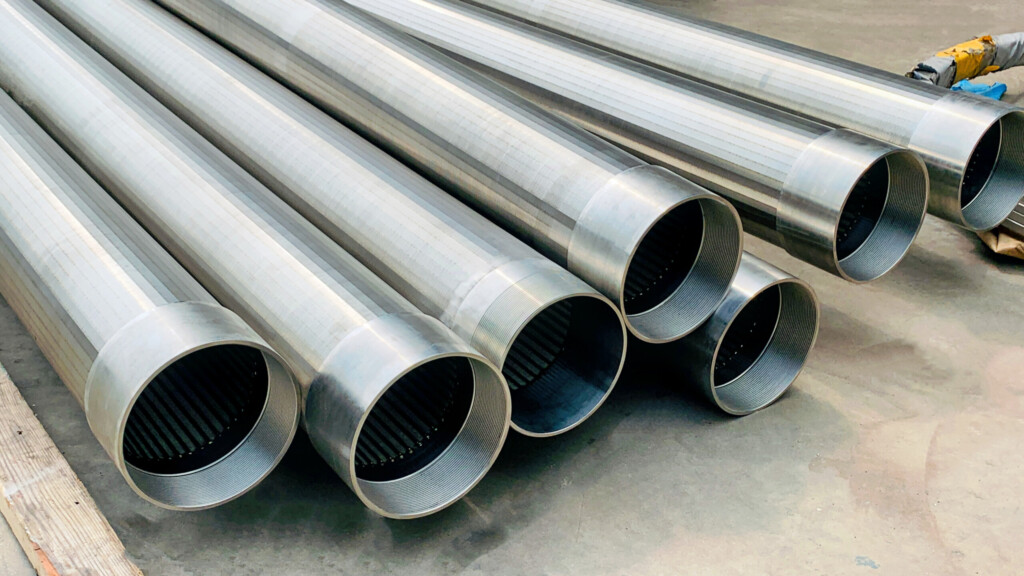
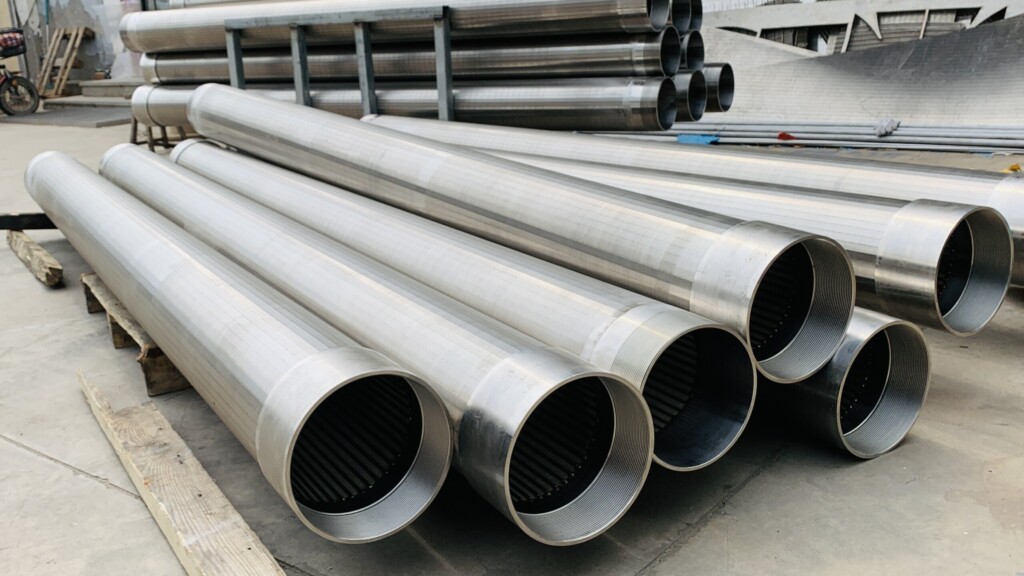
Water well screens are perforated pipes installed in a well to filter out sand and gravel from an aquifer while allowing water to flow in freely, supporting the borehole and preventing pump damage, often featuring wedge-shaped (Vee-Wire) designs for continuous slots that resist clogging and maximize water flow for efficient, long-lasting water supply.
Filtration: Keeps sand, silt, and gravel out of the well.
Support: Prevents the aquifer material from collapsing into the borehole.
Water Inflow: Creates a large open area for water to enter efficiently.
Pump Protection: Prevents abrasive particles from damaging pumps, extending well life.
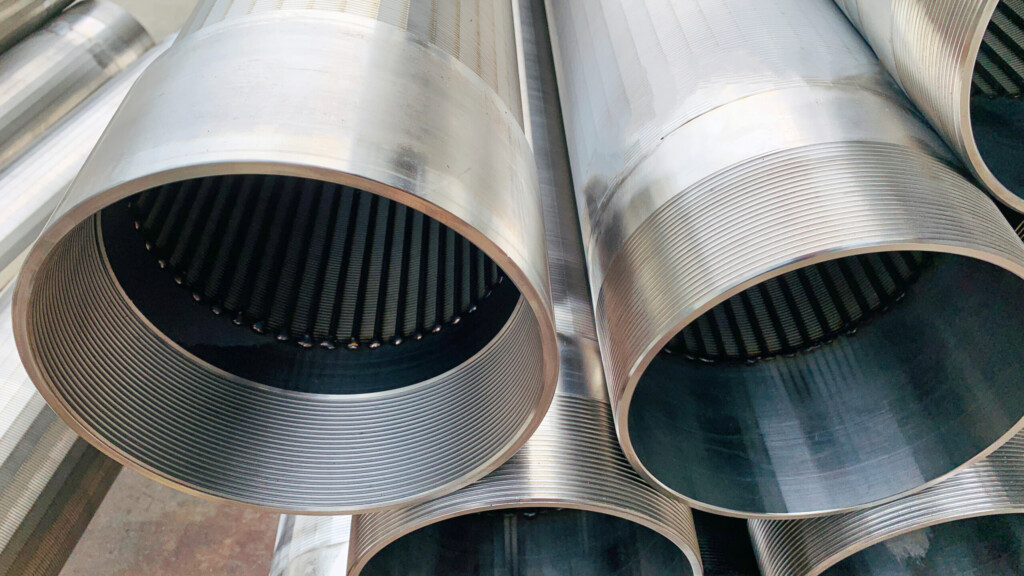
Wedge Wire/Vee-Wire: The most common type, using V-shaped profile wires wrapped around support rods to create continuous, non-clogging slots.
Materials: Typically stainless steel , chosen for durability and corrosion resistance.
Slot Size: Engineered to match the specific grain size of the aquifer material, ensuring sand control.
Efficiency: A well-designed screen minimizes drawdown (how far the water level drops when pumping), reducing energy costs and increasing yield.
Longevity: Proper screen selection is crucial for a well’s overall health, preventing maintenance issues from corrosion, incrustation, and sand pumping.
When you need to successfully finish an environmental drilling job, water well screen is an irreplaceable choice. It can efficiently prevent the unneeded sands from entering the well, while achieving higher productive efficiency and longer using life of the well.
Water Well Screens also be named Johnson Screen Pipe, Wedge Wire Screen Filter Pipe, Wedge Wire Screen Tubes, Industrial Screens, Water Wells, Water Well Screen and so on.
1.The slot size is 0.02mm-30mm
2.Main material is SS304/SS304L/316/316L/201 or other customized material.
3.Opening rate: 60%
4.Out Diameter: 19mm-1000mm
5.Length up to 6m
6.Connectors Ends type: Welding rings, Flanges, With Female&Males Threads and according to client’s request.
A water well screen is a filtration component installed at the bottom or side of a water well, typically made of perforated metal, plastic, or composite materials. Its core functions are twofold: first, to allow groundwater to flow into the well while preventing sediment, sand, gravel, and other debris from entering, which protects the well pump, piping, and downstream equipment from clogging or abrasion. Second, it helps stabilize the wellbore surrounding soil/rock to avoid collapse and extend the well’s service life.
The most common types include:
Slotted Screens: Made by cutting narrow slots into metal pipes (e.g., stainless steel, carbon steel). Suitable for medium to coarse gravel formations, offering high strength and durability. Ideal for deep wells or high-pressure applications.
Continuous Slot Screens: Features uniform, continuous slots formed by stretching or etching metal sheets. Provides precise slot sizes (from 0.1mm to several millimeters) for fine-grained formations (silt, fine sand), ensuring efficient filtration with minimal flow resistance.
Wire-Wrapped Screens: Constructed by wrapping a triangular or rectangular wire around vertical support rods, creating V-shaped slots. The V-design allows self-cleaning (debris is flushed out by water flow) and is widely used in sandy or unconsolidated formations. Resistant to clogging and corrosion.
Plastic Screens: Made of PVC or HDPE, lightweight, corrosion-resistant, and cost-effective. Suitable for shallow wells, low-salinity groundwater, or non-aggressive environments. Not recommended for high-pressure or high-temperature conditions.
Selection depends on formation type (grain size, consolidation), groundwater quality (salinity, acidity), well depth, pump capacity, and budget.
The slot size is critical to balance filtration efficiency and water yield. The general rule is to select a slot size that retains 90-95% of the formation’s granular material. This is determined by conducting a grain size analysis (sieve analysis) of the soil/rock samples from the wellbore:
For unconsolidated formations (sand, gravel), the slot size should be 1.5-2 times the diameter of the 90th percentile grain size (D90) — meaning 90% of the grains are larger than this size, preventing most sediment from entering.
For consolidated formations (sandstone, limestone) with natural fractures, larger slots (or perforations) may be used, as the formation itself provides primary filtration.
Oversized slots cause sand ingress; undersized slots reduce water yield and increase clogging risk.
Common materials and their applications:
Stainless Steel (304, 316L): High corrosion resistance, suitable for saline groundwater, acidic/alkaline environments, or drinking water wells. 316L offers superior resistance to chlorides and is ideal for coastal or industrial areas.
Carbon Steel: Cost-effective, high strength, but prone to corrosion. Used in non-aggressive groundwater (low salinity, neutral pH) or temporary wells. Requires anti-corrosion coating (e.g., epoxy) for long-term use.
PVC/HDPE: Corrosion-proof, lightweight, and affordable. Suitable for shallow domestic wells, irrigation wells, or groundwater with high chemical content (e.g., sulfates). Not suitable for high-pressure or high-temperature wells.
Composite Materials: Hybrid of plastic and fiberglass, offering corrosion resistance and moderate strength. Used in harsh environments where metal screens fail and plastic lacks durability.
Proper installation ensures screen performance and well integrity. Key steps include:
Wellbore Preparation: Drill the well to the target depth, ensure the borehole is straight and clean, and remove drilling fluid/sludge.
Screen Inspection: Check for damage (bent slots, cracks) and verify slot size matches the formation. For wire-wrapped screens, ensure no wire loose or detached.
Lowering the Screen: Attach the screen to the well casing (using couplings or welding) and lower it into the borehole carefully to avoid scraping the screen against the borehole wall.
Gravel Packing (if needed): For unconsolidated formations, place graded gravel (filter pack) around the screen to enhance filtration. The gravel size should be 4-6 times the screen slot size.
Sealing: Seal the annulus between the casing and borehole with bentonite clay or cement to prevent surface water contamination and stabilize the well.
Development: Flush the well (air lifting, surging) to remove fine particles and ensure water flows freely through the screen and gravel pack.
Common clogging causes include: sediment accumulation (fine sand, silt), mineral scaling (calcium, iron, manganese deposits), biological growth (biofilm, bacteria), and chemical precipitation.
Prevention measures:
Select the correct slot size and screen type for the formation.
Maintain proper well development after installation.
Regularly test groundwater quality and treat it (e.g., chlorination for bacteria, softening for scaling) if needed.
Resolution methods:
Mechanical Cleaning: Use surging (alternating pressure) or jetting (high-pressure water) to dislodge sediment.
Chemical Cleaning: Use descaling agents (e.g., hydrochloric acid for mineral scales) or biocides (e.g., chlorine for biofilm) — follow safety guidelines and flush thoroughly afterward.
Air Lifting: Remove sediment by lifting water and debris with compressed air.
Copyright © 2025 Anping County Chuangtuo Wire Mesh Products Co., Ltd All Rights Reserved.


